VBMT-HQ
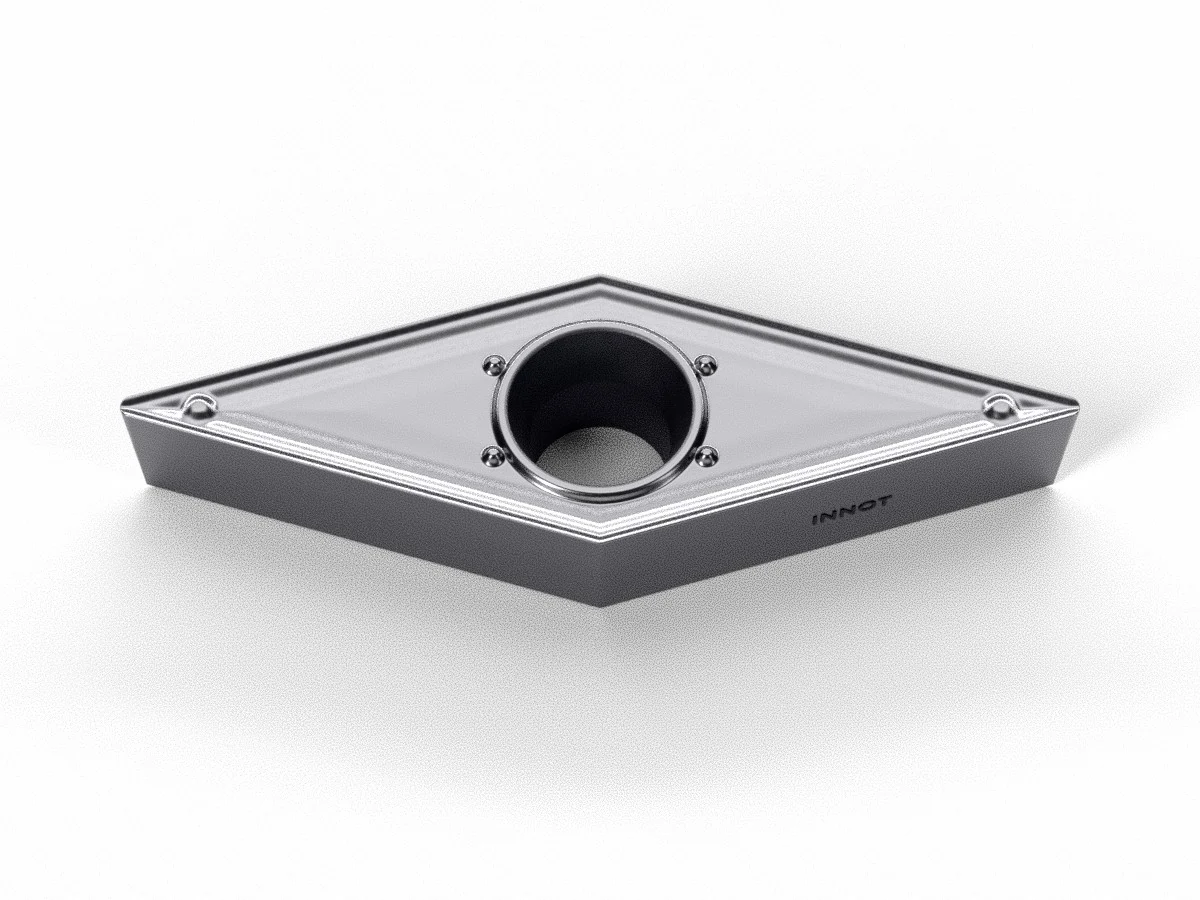
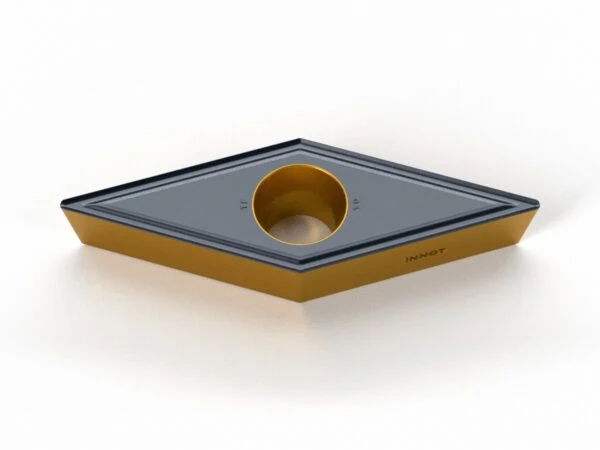
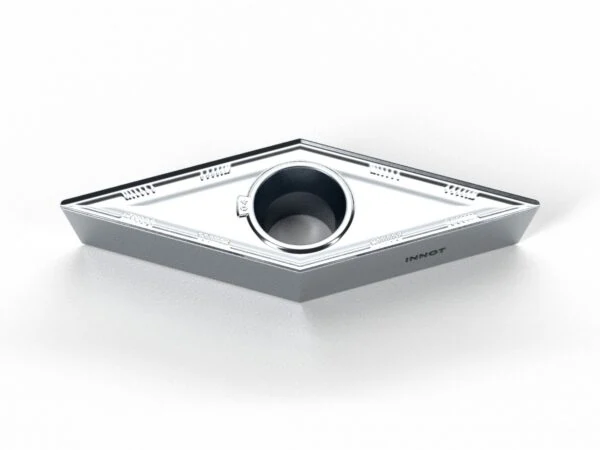
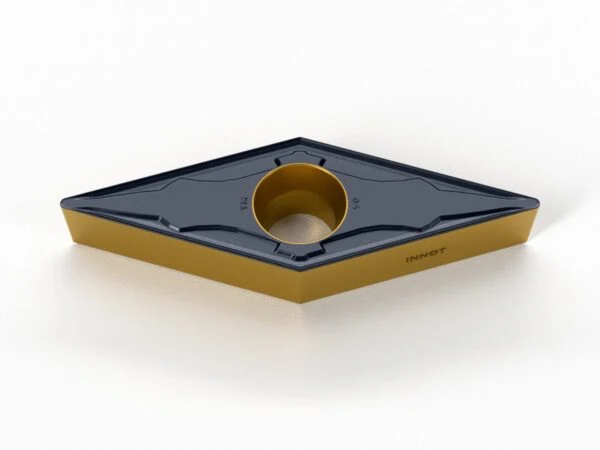
35° positive rhombic cermet insert (VBMT) for finishing and semi-finishing of steels with high surface quality.
Finishing
Cermet
★ ITC10 · IT115C
Technical data sheet PDFCutting data, sizes and grades
Want to try it first? Request a free tester

Description
ISO specifications
| ISO | RADIUS (RE) | AVAILABLE GRADES | CHIPBREAKER |
|---|---|---|---|
| VBMT1103 | 0.4 – 0.8 | ITC10 – IT115C | HQ |
| VBMT1604 | 0.4 – 0.8 | ITC10 – IT115C | HQ |
HQ chipbreaker data sheet
| Operation | Finishing |
| ISO material | P (steels, especially low and medium carbon) |
| Tolerance | M |
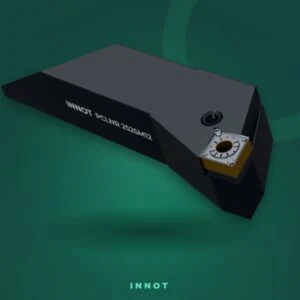
| Features | Universal chipbreaker for cermet, from finishing to semi-finishing. Three-dimensional rake angles and a double convex boss for excellent cutting performance and surface finish. 5° positive insert (shape V, 35° rhombic) with screw clamping: the slimmest tip in the range, for copy turning and profiling of grooves and radii. SVQB (107.5°) and SVUB (93°) type toolholders. |
Available INNOT grades
| Grade | ISO | Coating | Composition | Application |
|---|---|---|---|---|
| ITC10 ★ | P | Cermet | Uncoated | New-generation, very stable cermet: ideal for finishing low-carbon steels and wherever high surface quality is needed. Hard, compact surface, excellent chemical stability, wear and chipping resistance. |
| IT115C ★ | P | PVD | AlTiSiN + TiSiN | Coated cermet: compared with uncoated cermet it withstands high temperatures better and allows higher cutting speeds. Low-friction nano-gradient coating with excellent adhesion to the substrate: outstanding tool life and stability. |
★ Recommended grade for this chipbreaker. Cermet = ceramic-metallic material for high-quality finishes. PVD = physical vapour deposition coating. ISO P = steels.
Recommended cutting data
External turning of steels with cermet (ISO P)
Recommended cutting speed and feed for INNOT cermet grades.
| Grade | Material | Hardness | Vc (m/min) min – recomm. – max |
fn (mm/rev) |
|---|---|---|---|---|
| ITC10 | Low and medium carbon / low and medium alloy steels | 150 – 250 HB | 100 – 200 – 300 | 0.10 – 0.30 |
| ITC10 | High-carbon alloy steels | 350 HB | 100 – 150 – 200 | 0.05 – 0.25 |
| IT115C | Low and medium carbon / low and medium alloy steels | 150 – 250 HB | 200 – 300 – 400 | 0.10 – 0.30 |
| IT115C | High-carbon alloy steels | 350 HB | 180 – 260 – 320 | 0.05 – 0.25 |
Cermet works best in finishing with small depths of cut and stable conditions. IT115C (coated) allows higher speeds than ITC10.
Internal turning (boring) of steels with cermet (ISO P)
Starting values for internal turning with a boring bar, derived from this insert's external turning data: cutting speed −15%, feed −20%.
| Grade | Material | Hardness | Vc (m/min) min – recomm. – max |
fn (mm/rev) |
|---|---|---|---|---|
| ITC10 | Low and medium carbon / low and medium alloy steels | 150 – 250 HB | 85 – 170 – 255 | 0.08 – 0.24 |
| ITC10 | High-carbon alloy steels | 350 HB | 85 – 130 – 170 | 0.04 – 0.20 |
| IT115C | Low and medium carbon / low and medium alloy steels | 150 – 250 HB | 170 – 255 – 340 | 0.08 – 0.24 |
| IT115C | High-carbon alloy steels | 350 HB | 155 – 220 – 270 | 0.04 – 0.20 |
With a boring bar overhang above 3 times the diameter (steel bar) or 5 times (carbide or anti-vibration bar), reduce speed and feed further. Use the bar's internal coolant to clear the chips.
You may also like
Recently viewed
VBGT-AK
5×D solid carbide drill
WNMG-BF
SDKT-SM
DNMA