RCMX
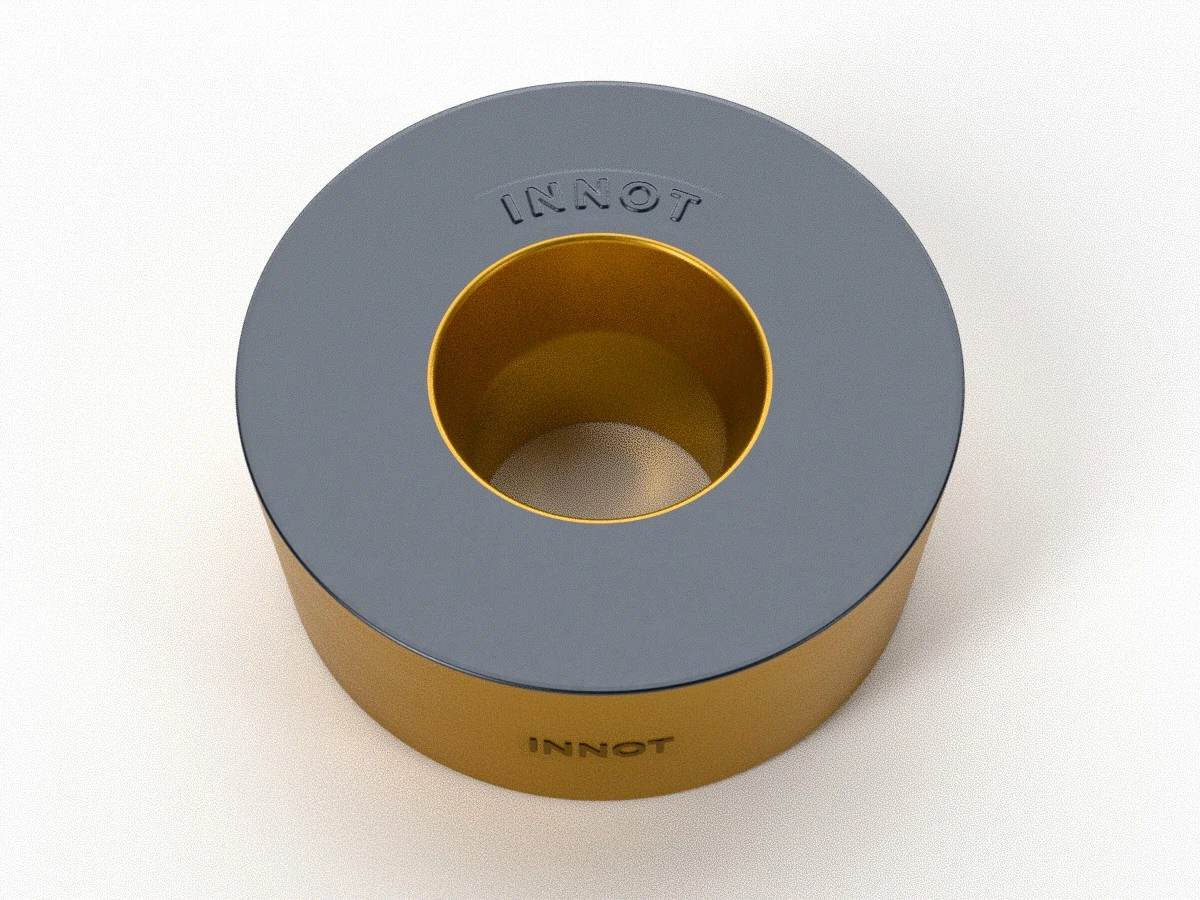
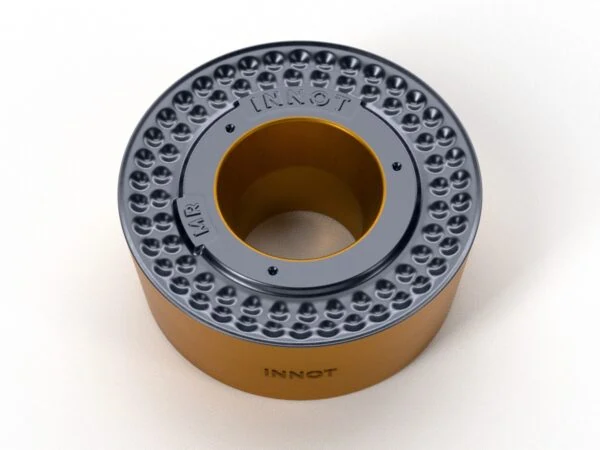
Positive round insert (RCMX) for profiling and roughing of steel profiles, with INNOT CVD grades.
Profiling
CVD
★ IT8115 · IT8225
Technical data sheet PDFCutting data, sizes and grades
Want to try it first? Request a free tester

Description
ISO specifications
| ISO | DIAMETER (IC) | AVAILABLE GRADES | CHIPBREAKER |
|---|---|---|---|
| RCMX1003MO | Ø10 | IT8105 – IT8115 – IT8125 – IT8225 | Universal (MO) |
| RCMX1204MO | Ø12 | IT8105 – IT8115 – IT8125 – IT8225 | Universal (MO) |
| RCMX1606MO | Ø16 | IT8105 – IT8115 – IT8125 – IT8225 | Universal (MO) |
| RCMX2006MO | Ø20 | IT8105 – IT8115 – IT8125 – IT8225 | Universal (MO) |
| RCMX2507MO | Ø25 | IT8105 – IT8115 – IT8125 – IT8225 | Universal (MO) |
| RCMX3209MO | Ø32 | IT8105 – IT8115 – IT8125 – IT8225 | Universal (MO) |
Universal (MO) chipbreaker data sheet
| Operation | Profiling |
| ISO material | P (non-alloy, alloy and tool steels) |
| Tolerance | M |
| Features | Universal chipbreaker for profiling: the high-strength cutting edge ensures great reliability and is the first choice for roughing profiles. 7° positive round insert (RCMX) with cylindrical hole: very strong circular cutting edge, for profiling, copying of radii and roughing of profiles; it is the typical choice for turning railway wheels. MRGC and MRDC type toolholders. |
Available INNOT grades
| Grade | ISO | Coating | Composition | Application |
|---|---|---|---|---|
| IT8105 | P | CVD | TiN + MT-TiCN + Al₂O₃ | Turning of steel in stable conditions. High hot hardness, resistance to wear and plastic deformation. |
| IT8115 ★ | P | CVD | TiN + MT-TiCN + Al₂O₃ | Continuous and lightly interrupted cuts. Finishing and semi-finishing of carbon and alloy steels. |
| IT8125 | P | CVD | TiN + MT-TiCN + Al₂O₃ | Interrupted and continuous cuts on steel. The reinforced substrate limits plastic deformation at high temperature. |
| IT8225 ★ | P | CVD | TiN + MT-TiCN + Al₂O₃ | First-choice grade for steel, very versatile. Multilayer coating with excellent wear resistance and toughness. |
★ Recommended grade for this chipbreaker. CVD = chemical vapour deposition coating. ISO P = steels.
Recommended cutting data
External turning of steels (ISO P) – round insert
Cutting speed by grade: values of the INNOT CVD grades on steels. Feed and depth of cut depend on the insert diameter: see the table below.
| Material | Condition | Vc (m/min) by grade |
|---|---|---|
| Structural steels ≤ 180 HB (S235, C45…) |
Stable | IT8105: 230 – 400 IT8115: 215 – 360 IT8125: 190 – 355 IT8225: 205 – 375 |
| Structural steels ≤ 180 HB (S235, C45…) |
Average | IT8105: 225 – 380 IT8115: 200 – 380 IT8125: 185 – 350 IT8225: 195 – 360 |
| Structural steels ≤ 180 HB (S235, C45…) |
Difficult | IT8125: 185 – 320 IT8225: 195 – 360 |
| Carbon and alloy steels 180 – 280 HB (41Cr4, 42CrMo4…) |
Stable | IT8105: 230 – 400 IT8115: 215 – 360 IT8125: 190 – 355 IT8225: 205 – 375 |
| Carbon and alloy steels 180 – 280 HB (41Cr4, 42CrMo4…) |
Average | IT8105: 225 – 430 IT8115: 200 – 405 IT8125: 185 – 350 IT8225: 195 – 360 |
| Carbon and alloy steels 180 – 280 HB (41Cr4, 42CrMo4…) |
Difficult | IT8125: 185 – 350 IT8225: 195 – 360 |
| Quenched and tempered steels ≥ 280 HB | Stable | IT8105: 220 – 400 IT8115: 205 – 380 |
| Quenched and tempered steels ≥ 280 HB | Average | IT8105: 220 – 380 IT8115: 205 – 360 |
Starting values for profiling and roughing. Conditions not listed are not recommended for that material.
Internal turning (boring) of steels (ISO P) – round insert
Starting values for internal turning with a boring bar, derived from this insert's external turning data: cutting speed −15%, feed −20%.
| Material | Condition | Vc (m/min) by grade |
|---|---|---|
| Structural steels ≤ 180 HB (S235, C45…) |
Stable | IT8105: 195 – 340 IT8115: 185 – 305 IT8125: 160 – 300 IT8225: 175 – 320 |
| Structural steels ≤ 180 HB (S235, C45…) |
Average | IT8105: 190 – 325 IT8115: 170 – 325 IT8125: 155 – 300 IT8225: 165 – 305 |
| Structural steels ≤ 180 HB (S235, C45…) |
Difficult | IT8125: 155 – 270 IT8225: 165 – 305 |
| Carbon and alloy steels 180 – 280 HB (41Cr4, 42CrMo4…) |
Stable | IT8105: 195 – 340 IT8115: 185 – 305 IT8125: 160 – 300 IT8225: 175 – 320 |
| Carbon and alloy steels 180 – 280 HB (41Cr4, 42CrMo4…) |
Average | IT8105: 190 – 365 IT8115: 170 – 345 IT8125: 155 – 300 IT8225: 165 – 305 |
| Carbon and alloy steels 180 – 280 HB (41Cr4, 42CrMo4…) |
Difficult | IT8125: 155 – 300 IT8225: 165 – 305 |
| Quenched and tempered steels ≥ 280 HB | Stable | IT8105: 185 – 340 IT8115: 175 – 325 |
| Quenched and tempered steels ≥ 280 HB | Average | IT8105: 185 – 325 IT8115: 175 – 305 |
With a boring bar overhang above 3 times the diameter (steel bar) or 5 times (carbide or anti-vibration bar), reduce speed and feed further. Use the bar's internal coolant to clear the chips.
External turning: feed and depth of cut by insert diameter
With round inserts the chip thickness decreases with the depth of cut: with light cuts you can use the upper part of the feed range.
| Insert diameter (IC) | ap (mm) | fn (mm/rev) |
|---|---|---|
| Ø10 | 0.50 – 2.50 | 0.15 – 0.35 |
| Ø12 | 0.60 – 3.00 | 0.15 – 0.40 |
| Ø16 | 0.80 – 4.00 | 0.20 – 0.50 |
| Ø20 | 1.00 – 5.00 | 0.25 – 0.60 |
| Ø25 | 1.30 – 6.30 | 0.30 – 0.70 |
| Ø32 | 1.60 – 8.00 | 0.35 – 0.80 |
Reduce the feed in fillets and copying sections. Maximum depth of cut about one quarter of the diameter (IC).
Internal turning (boring): feed and depth of cut by insert diameter
Starting values for internal turning with a boring bar, derived from this insert's external turning data: cutting speed −15%, feed −20%, maximum depth of cut −40%.
| Insert diameter (IC) | ap (mm) | fn (mm/rev) |
|---|---|---|
| Ø10 | 0.50 – 1.50 | 0.12 – 0.28 |
| Ø12 | 0.60 – 1.80 | 0.12 – 0.32 |
| Ø16 | 0.80 – 2.40 | 0.16 – 0.40 |
| Ø20 | 1.00 – 3.00 | 0.20 – 0.48 |
| Ø25 | 1.30 – 3.80 | 0.24 – 0.56 |
| Ø32 | 1.60 – 4.80 | 0.28 – 0.64 |
With a boring bar overhang above 3 times the diameter (steel bar) or 5 times (carbide or anti-vibration bar), reduce speed and feed further. Use the bar's internal coolant to clear the chips.
For complex profiles or materials other than steel, send us the material, hardness and part drawing: we will send you starting values for your case.
You may also like
RCMX-MR