QCKB
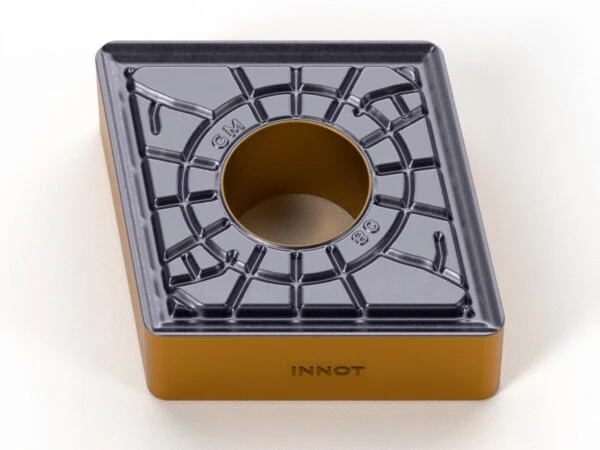
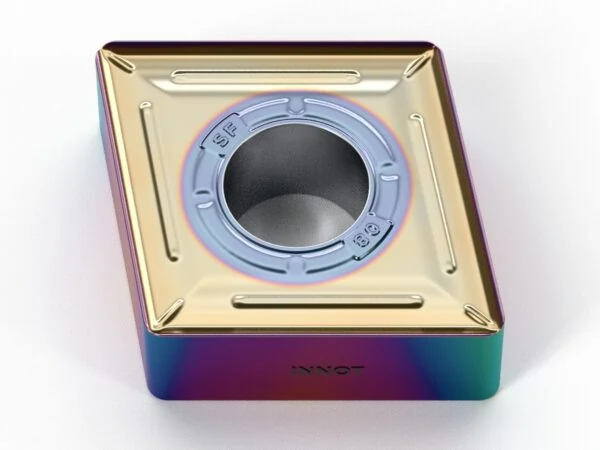
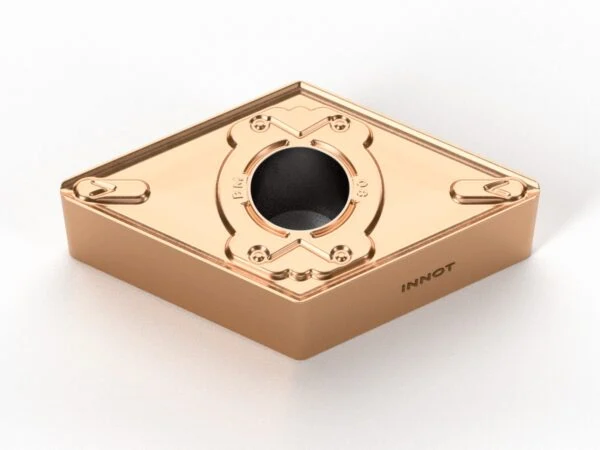
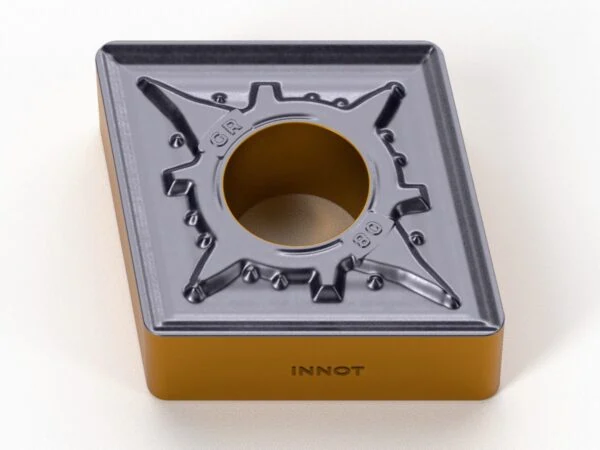
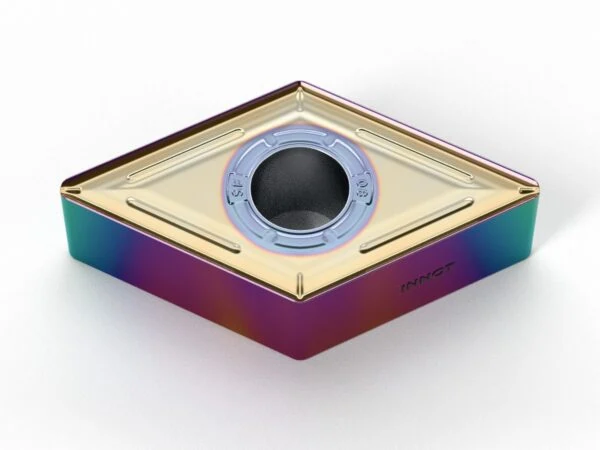
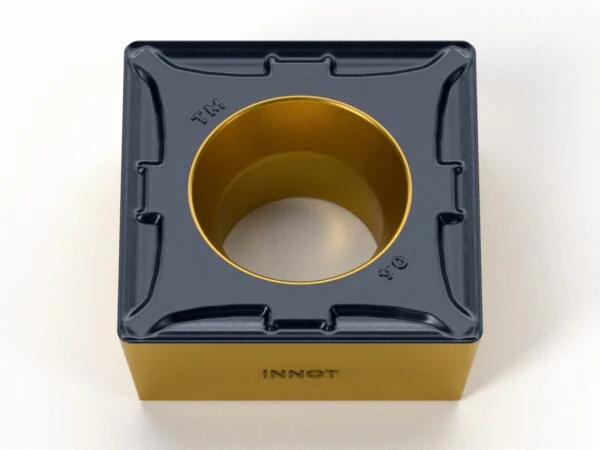
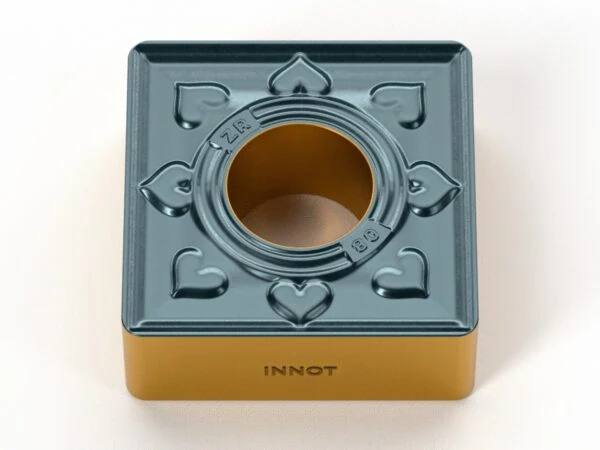
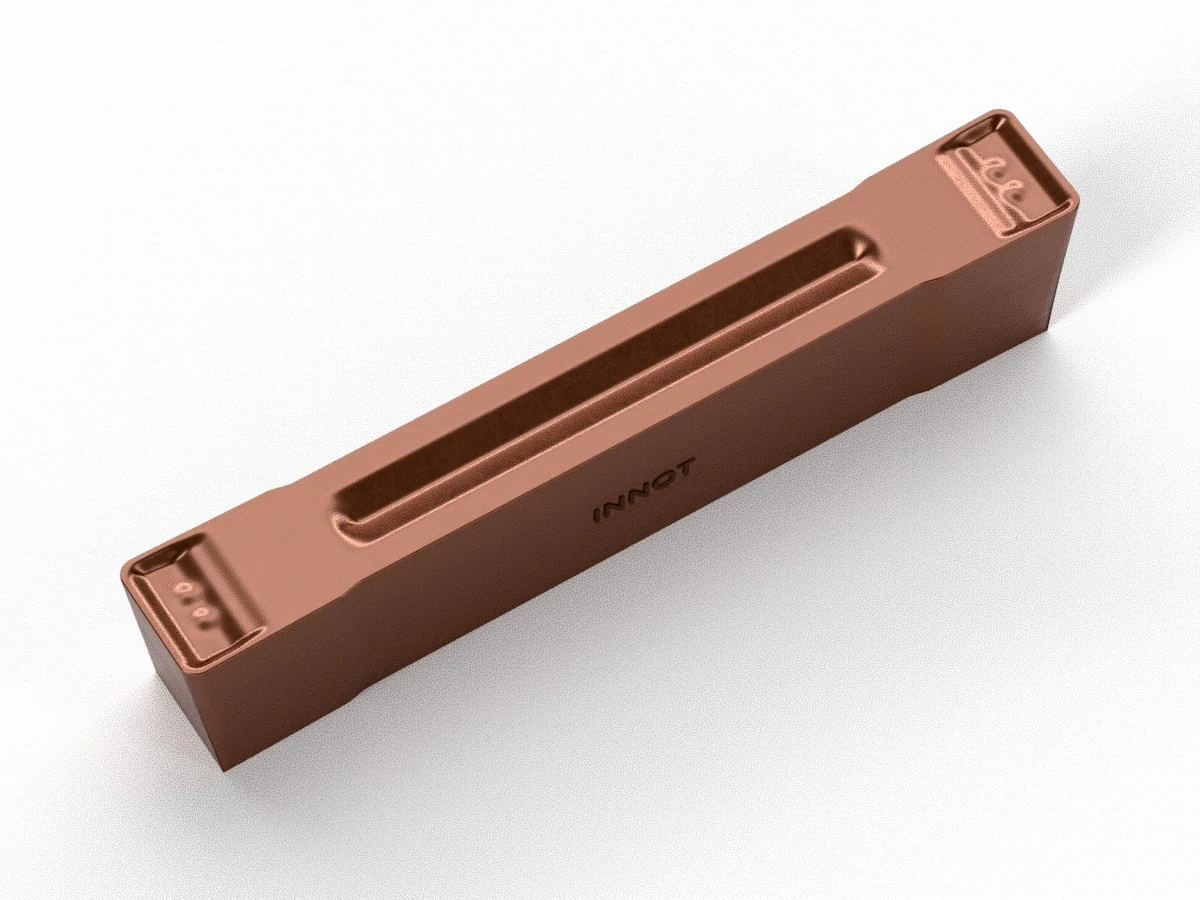
Ground double-ended insert for precision grooves, with universal chipbreaker and INNOT PVD grades.
ISO M
Precision grooves
Ground
PVD
★ IT7225
Technical data sheet PDFCutting data, sizes and grades
Want to try it first? Request a free tester

Description
Specifications
| Code | Width CW | Corner radius RE | INSL | Available grades |
|---|---|---|---|---|
| QCKB2002 | 2.0 mm (±0.02) | 0.2 | 16.0 | IT7125 – IT7225 |
| QCKB2502 | 2.5 mm (±0.02) | 0.2 | 18.5 | IT7125 – IT7225 |
| QCKB3004 | 3.0 mm (±0.02) | 0.4 | 21.0 | IT7125 – IT7225 |
| QCKB4004 | 4.0 mm (±0.02) | 0.4 | 21.0 | IT7125 – IT7225 |
| QCKB5008 | 5.0 mm (±0.02) | 0.8 | 26.0 | IT7125 – IT7225 |
CW = cutting width, RE = corner radius, INSL = insert length (mm).
QCKB insert data sheet
| Operation | Precision grooves (ring seats, grooves to size) |
| ISO material | M (stainless steels) |
| Type | Two cutting edges, ground |
| Tolerance | K – width ±0.02 mm |
| Features | Ground insert with a tight width tolerance: ideal when the groove size must be achieved in a single plunge. Universal chipbreaker for consistent behaviour on different materials. |
| Compatible toolholders | Toolholders for external and face grooves, boring bars for internal grooves |
Available INNOT grades
| Grade | ISO | Coating | Composition | Application |
|---|---|---|---|---|
| IT7125 | M | PVD | AlTiN | Universal grade for turning stainless steel in continuous and interrupted cuts. Smooth, low-friction coating, high nano-hardness and excellent oxidation resistance. |
| IT7225 ★ | M | PVD | AlTiSiN + TiSiN | First-choice grade for turning stainless steel. Nano-gradient coating on a sub-micron grain substrate: excellent wear resistance and toughness. |
★ Recommended grade for this insert. CVD = chemical vapour deposition coating, PVD = physical vapour deposition coating.
Recommended cutting data
Parting and grooving – cutting speed
Cutting speed Vc (m/min) as a function of feed fn (mm/rev)
| Material | HB | Rm (N/mm²) | IT7225 | ||
|---|---|---|---|---|---|
| fn 0.1 | fn 0.3 | fn 0.5 | |||
| NON-ALLOY STEELS | |||||
| C≤0.25% – Annealed | 125 | 428 | 260 | 180 | 120 |
| 0.25<C≤0.55% – Annealed | 190 | 639 | 200 | 140 | 105 |
| 0.25<C≤0.55% – Quenched and tempered | 210 | 708 | 120 | 110 | 100 |
| C>0.55% – Annealed | 190 | 639 | 130 | 120 | 110 |
| C>0.55% – Quenched and tempered | 300 | 1013 | 110 | 95 | 70 |
| Short-chipping – Annealed | 220 | 745 | 120 | 105 | 90 |
| LOW-ALLOY STEELS | |||||
| Annealed | 175 | 591 | 170 | 135 | 120 |
| Quenched and tempered | 300 | 1013 | 105 | 90 | 70 |
| Quenched and tempered | 380 | 1282 | 160 | 80 | 60 |
| STAINLESS STEELS | |||||
| Ferritic / martensitic – Annealed | 200 | 675 | 200 | 150 | 105 |
| Martensitic – Quenched and tempered | 330 | 1114 | 150 | 115 | 70 |
| Austenitic – Solution annealed | 200 | 675 | 185 | 155 | 125 |
| Precipitation-hardening austenitic (PH) | 300 | 1013 | 165 | 135 | 95 |
| Austenitic-ferritic (duplex) | 230 | 778 | 145 | 110 | 85 |
Guide values for machining with coolant. For parting and internal grooving reduce the speed by 30–50%. When parting, as you approach the centre of the part, reduce the feed by 30%.
Tips for use
- Parting off: when approaching the centre reduce the feed by 30% for longer life and a better finish; keep the tool overhang to a minimum.
- External grooving and side turning: with depths over 0.5 mm work in radial passes (up to 0.75 × insert width), retract 0.1 mm, then an axial pass.
- Wide grooves: make side-by-side stepped plunges, then finish the bottom and the flanks.
- Face grooves: start from the largest diameter and move inwards; for finishing machine the bottom and the outer diameter first, then the inner one.
- Internal grooves: work from the inside outwards to help the chip out.
You may also like